



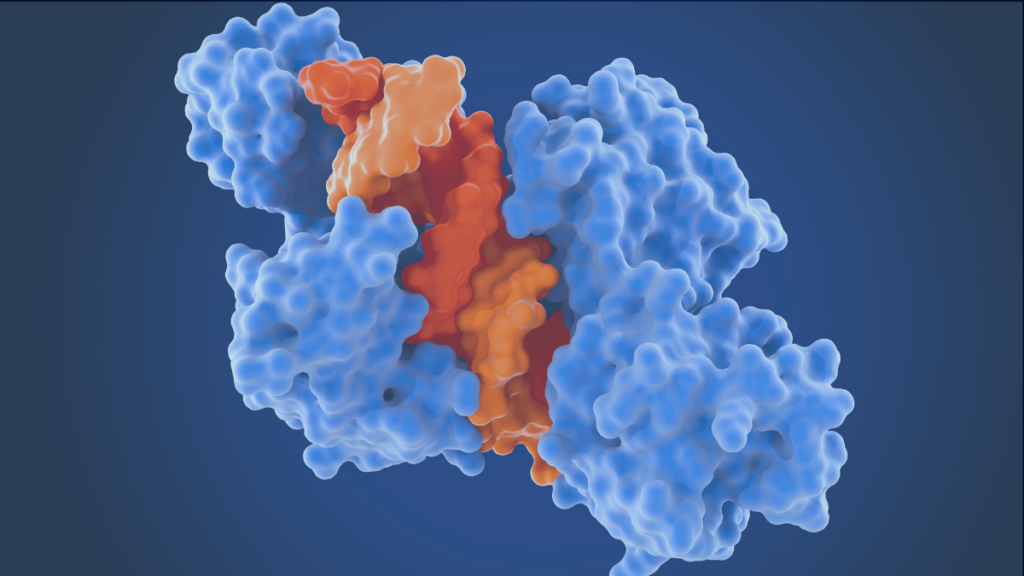
The Defense Advanced Research Projects Agency (DARPA) has issued a Special Notice for a new Defense Sciences Office (DSO) program, Protein ENGineering (PENG), and is hosting a hybrid Proposers Day on August 10, 2026, in Arlington, VA, with a webcast option for virtual attendees. DARPA expects to publish the full program solicitation by the end of July 2026 on SAM.gov.
Still in the pre-announcement phase, PENG sits squarely in DARPA’s wheelhouse to treat proteins as programmable execution engines of biology. The Proposers’ Day will introduce the program vision, outline how the effort will be structured, and give potential performers the opportunity to network for teaming purposes.
In‑person participation is capped at three attendees per organization, and registration is required for everyone, including those watching the webcast, and will close on July 31, 2026, at 4:00 p.m. ET or when capacity is reached.
What PENG Aims to Do
The Protein ENGineering program seeks to establish a multifunctional, target‑agnostic platform for precise, programmable editing of endogenous proteins. Rather than developing isolated, target‑specific tools, DARPA is looking for approaches that integrate novel splicing, ligation, and co‑translational techniques to purposely identify and edit existing proteins in order to generate alternate functions.
DARPA describes PENG as treating protein editing like “dynamic molecular software,” with technologies that can introduce precise structural and functional changes, offer tunable reversibility, and scale across diverse proteins and complex cellular environments. The program may explore multiple technical paths, moving from basic validation to robust demonstrations of efficacy in well-controlled systems.
Ultimately, PENG aims to deliver a foundational toolkit that lets researchers directly and reversibly affect the functional layer of biology while staying within bench‑top models and complex in vitro tissue systems such as organoids. All work under PENG is limited to non-clinical settings; no human testing or clinical trials will be conducted under this program.
Who Should Be Paying Attention
DARPA is inviting participation from industry, academia, and government labs, and is explicitly encouraging non‑traditional performers, including small businesses, academic and research institutions, and first‑time government contractors. Teams with deep experience in protein engineering, synthetic biology, molecular biology, proteomics, splicing and ligation technologies, and advanced in vitro or organoid platforms are likely to see strong alignment with PENG’s objectives.
Because the program emphasizes target‑agnostic, platform‑level capabilities, organizations that can combine computational design, high‑throughput experimentation, and systems‑level validation may be particularly competitive once the full solicitation is released.
Why It Matters
PENG complements DARPA’s broader objective to understand, predict, and control protein function across domains like agriculture, biotechnology, advanced materials, and environmental resilience. By focusing on programmable editing of existing proteins and treating the proteome as a dynamic, engineerable layer, PENG has the possibility to unlock new synthetic biology tools, biosecurity capabilities, and preclinical therapeutic strategies, all while staying within in vitro systems and organoid models.
EverGlade is a national advisory firm helping innovators navigate the federal funding ecosystem. We support companies across the funding lifecycle, from early-stage strategy through proposal development, negotiations, and post-award execution, ensuring you win the award and deliver the program.
For additional information on where your capabilities could plug into this emerging program, schedule a conversation with our team.


