
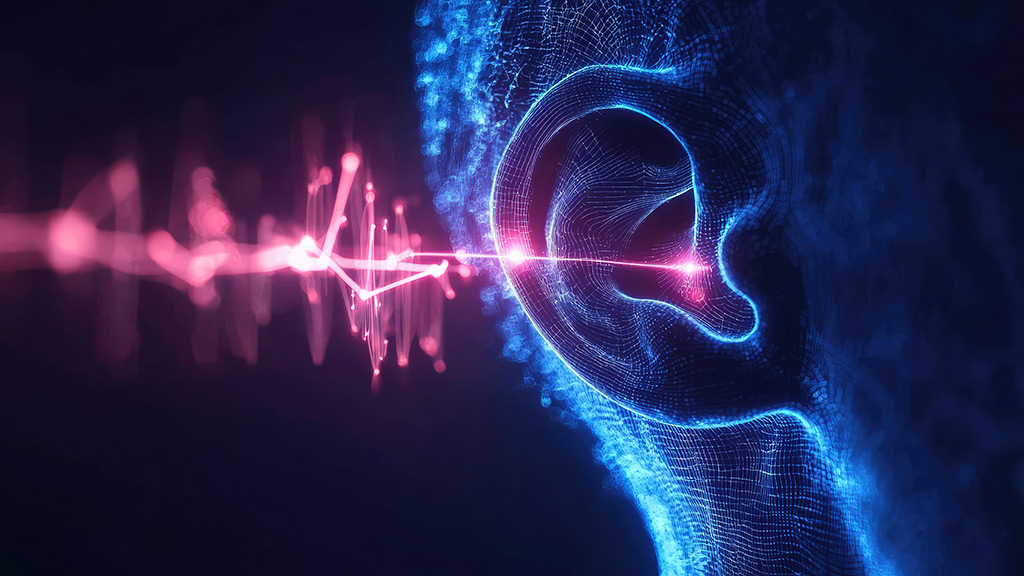
The Advanced Research Projects Agency for Health (ARPA-H), through its Health Science Futures (HSF) Office, has released an Innovative Solutions Opening (ISO) for Hearing Enhancement through ARtificially Intelligent NeurotechnoloGy (HEARING), ARPA-H-SOL-26-154. The program seeks to fundamentally rethink hearing loss treatment by shifting the focus from the ear alone to the brain’s auditory cortex.
ARPA-H estimates that more than 70 million Americans live with hearing loss, contributing to over $200 billion annually in medical costs, lost wages, and reduced productivity. Current hearing aids and cochlear implants often struggle in noisy, real-world environments because they amplify sound broadly rather than selectively focusing on what a listener intends to hear. The HEARING program aims to address this challenge through a minimally invasive, brain-connected hearing restoration platform that dynamically adapts sound based on neural activity and listener intent.
Program Overview
HEARING is organized into three integrated Technical Areas (TAs):
- TA1: Intracortical Device(s)
Development of minimally invasive brain interfaces capable of recording and stimulating auditory cortical regions without requiring open-skull surgery. - TA2: Dynamic Sound Modulator
Creation of a wearable, hearing-aid-like device that wirelessly powers and communicates with the implanted interface while adjusting sound in real time. - TA3: Auditory Read & Write Algorithms
Development of machine learning algorithms that decode listener intent, reduce background noise, and restore missing auditory information through cortical stimulation.
ARPA-H requires proposers to address all three TAs within a single integrated team structure spanning neuroscience, biomedical engineering, audiology, neuromodulation, machine learning, and regulatory expertise.
Program Structure & Requirements
The HEARING program is structured as a 4.5-year effort across three phases:
- Phase 1 (18 months): Prototype development and proof-of-concept validation
- Phase 2 (24 months): Pre-clinical testing, FDA engagement, and system integration
- Phase 3 (12 months): First-in-human clinical trials in patients with mild, moderate, and severe hearing loss
Final program success will require demonstrating meaningful improvements in speech-in-noise perception and real-world hearing performance compared to both unaided hearing and existing hearing-assistive devices. The program also emphasizes low-latency closed-loop performance, wireless communication, long-duration operation, and rapid personalization of AI algorithms for new users.
Key Dates
ARPA-H has outlined the following deadlines (all times Eastern):
- Proposers’ Day: June 8, 2026
- Questions Due Date: June 15, 2026, 5:00 PM
- Solution Summary Due Date: June 29, 2026, 2:00 PM
- Full Proposal Due Date: August 14, 2026, 2:00 PM
Strategic Impact
HEARING represents a major step toward next-generation neurotechnology-enabled hearing restoration. By directly engaging the brain’s auditory processing centers, ARPA-H aims to create systems that restore more natural hearing in complex environments while reducing the cognitive burden associated with hearing loss. The technologies developed through HEARING may also lay the foundation for future advances in broader auditory processing disorders, including tinnitus and hyperacusis.
If your company is considering applying for federal funding, your journey starts here. EverGlade is a national advisory firm helping innovators navigate the federal funding ecosystem. We support companies across the funding lifecycle, from early-stage strategy through proposal development, negotiations, and post-award execution, connecting breakthrough innovation with non-dilutive funding. We support programs across federal agencies including ARPA-H, BARDA, DARPA, DTRA, NIAID, CPE CBRND, DOE, and DFC, among others.
For additional information, schedule a free consultation with our team.