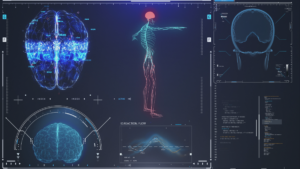


The Defense Advanced Research Projects Agency (DARPA), through its Biological Technologies Office (BTO), has officially released Program Solicitation DARPA-PS-26-26 for the Virtual-Integrated Twin for Autonomous Lifesaving (VITAL) program. This formal solicitation builds on the previously issued Special Notice and establishes the full scope, structure, and submission process for the program.
DARPA’s overarching goal for VITAL is ambitious and highly consequential: to develop continuously updating computational models of the cardiovascular system that integrate patient data with biological physics to predict outcomes in real time. In practical terms, the program seeks to enable clinicians and future providers to assess treatment options for acute and chronic pathologies using predictive, physics-grounded digital twins of human cardiovascular physiology.
Solicitation Overview and Technical Objectives
At its core, VITAL aims to establish a foundation for causal, prediction-driven decision support using high-fidelity (HF) digital twins that explicitly represent the physical, biochemical, and anatomical dynamics governing cardiovascular physiology. These HF models are intended to serve as a baseline predictive reference across static, chronic, and acute physiological regimes. For each regime, performers will be expected to rigorously quantify computational speed, forecast horizon, predictive accuracy, uncertainty bounds, data requirements, sensitivity to parameter estimation, segmentation error, and measurement sparsity. A central outcome of the program is a rigorous characterization of HF model capability limits, providing evidence-based guidance on when such models are suitable and where fundamental limitations remain.
Recognizing the tradeoff between mechanistic fidelity and real-time responsiveness, DARPA also intends to explore reduced-order models (ROMs) derived from HF dynamics. While HF models provide strong causal interpretability, ROMs are better suited for real-time execution and continuous updating, particularly when coupled to streaming sensor data. Through systematic verification, validation, and uncertainty quantification, VITAL will determine when and where HF models, ROMs, and measurement-driven inference approaches are reliable and appropriate.
A defining feature of the program is the establishment of an Image-to-Physics-to-Twin pipeline. This pipeline will automatically integrate multimodal clinical imaging such as magnetic resonance imaging (MRI), computed tomography (CT), computed tomography angiography (CTA), and ultrasound with sparse physiological and biochemical measurements to construct patient- or archetype-specific high-fidelity digital twins. Segmented anatomy will be translated into vascular networks, organs, and injury geometries spanning chronic and acute conditions, with localized three-dimensional injury-site solvers capturing bleeding and impedance dynamics and whole-body zero-dimensional and one-dimensional physiology models propagating global responses such as shock.
VITAL is structured as a two-phase program:
- Phase 1 will establish technical credibility through the development of HF models and rigorous quantification of their performance limits.
- Phase 2 will evaluate performance tradeoffs associated with transitions from HF models to ROMs, including scalability, real-time execution, and intervention-forecasting accuracy.
DARPA has also explicitly encouraged teaming to ensure the breadth of expertise required to achieve VITAL’s objectives.
Key Dates
With the release of the Program Solicitation, DARPA has now provided a defined timeline for VITAL:
- Deadline for submitting questions: April 23, 2026 at 12:00PM ET
- Abstracts due: May 20, 2026 at 5:00PM ET
- Selected proposers will be invited to submit an Oral Presentation Proposal package, with oral presentations anticipated around July 23, 2026.
Funding Expectations
The Program Solicitation indicates that DARPA anticipates making multiple awards using Other Transaction for Prototype agreements. However, specific award sizes and total funding levels are not disclosed and will be determined at the Government’s discretion.
Advancing Human Health Through Predictive Cardiovascular Modeling
VITAL represents a forward-looking investment in digital medicine and lifesaving intervention. By developing high-fidelity, physics-informed digital twins of the cardiovascular system that can predict outcomes in real time, DARPA is seeking to transform how clinicians assess and manage acute injuries, bleeding events, shock, and chronic cardiovascular pathologies. The ability to forecast physiological response to intervention under sparse and noisy sensing conditions has clear implications for battlefield medicine, emergency response, and potentially civilian trauma and critical care.
For organizations with strengths in computational modeling, cardiovascular physiology, medical imaging integration, artificial intelligence, physics-informed machine learning, and real-time systems, VITAL presents a compelling opportunity to shape the future of predictive clinical decision support.
If your company has considered applying for federal funding, your federal funding journey starts here. EverGlade is a national firm that helps organizations win and manage federal awards. We offer services ranging from Pursuit, Proposal and Post-Award support to comply with federal regulations at agencies including BARDA, ARPA-H, NIH, DTRA, JPEO, DOD, DIU, DOE, and DARPA.